


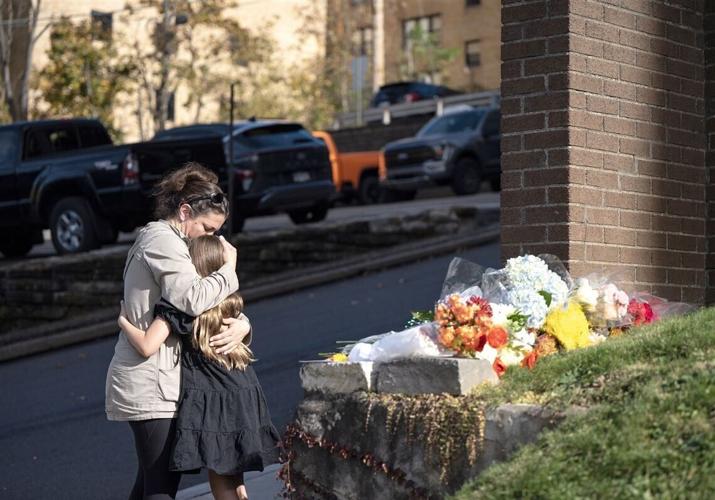
When tragedy strikes a community, parents face a difficult question: How do you explain the unthinkable to a child?
This story discusses suicide. If you or a loved one are having thoughts of suicide, call or text 988, or use the online chat option at http://988lifeline.org/chat.
The recent deaths of Patrick Lynch, 42, and his two children, James, 8, and Caroline, 6, in Mt. Lebanon have left a community grieving and raised questions for parents, teachers and caregivers about how to help children process a traumatic event.
The Allegheny County medical examiner has ruled that all three died of multiple blunt force injuries in what authorities are calling a murder-suicide.
People are also reading…
Even children who weren't directly acquainted with the family may hear about what happened through classmates, social media or conversations among adults. For those who knew the children, the loss may be especially difficult to understand.
The instinct for some parents may be to shield their children by avoiding the subject altogether.
But that's not necessarily the best approach, said Kathryn Spearman, an assistant professor at Penn State's Ross and Carol Nese College of Nursing whose research focuses on how domestic and other violence affects children.
"I think the biggest [mistake] is avoiding the topic altogether," Spearman said. "So I think it's really important when kids are told the truth in a developmentally appropriate way, and they're told the truth by somebody that they trust."
Children often overhear adult conversations or hear information from other children, she said. Without a trusted adult to help them understand what happened, they may fill in the gaps with their own imaginations.
"I think honesty is the best policy," she said. "If a child's old enough to ask questions and formulate the question, then they're also old enough to receive sensitive answers to that."
Parents don't necessarily have to wait for children to bring up the subject, Spearman said. A trusted adult can acknowledge that something terrible happened, then give children an opportunity to ask questions.
"The best practice is really that the safe adults in their lives give them the right language to understand that sad thing."
Abigail Schlesinger, clinical chief of Child and Adolescent Psychiatry and Integrated Care at UPMC Western Psychiatric Hospital and UPMC Children's Hospital of Pittsburgh, agrees that parents shouldn't assume their children are unaware of what happened.
"I think people think that older kids hear things and younger kids don't. Social media gets information out, but we live in a world where even the youngest kids might have heard things," she said.
Rather than launching into a detailed explanation about the incident, Schlesinger recommends first asking children what they've heard.
That allows adults to understand what children already know, including whether they've heard misinformation or developed their own interpretation of events.
Some children may have heard nothing at all. If they aren't concerned or don't have questions, parents don't need to force an extended conversation, she said. They should simply make clear that they are available if questions or concerns arise.
Be honest, but age-appropriate
How much information a child needs depends on the child's age and ability to understand what happened.
Spearman said parents can use straightforward language, including terms such as homicide and suicide, rather than relying on euphemisms or vague explanations.
The goal is to provide children with enough information to understand the situation without overwhelming them with unnecessary details.
Schlesinger said that for preschool-age children, a brief check-in may be sufficient, particularly if they haven't heard about the incident. "You do not need to go digging," she said.
For elementary-age children, particularly those attending schools where the children were known, Schlesinger recommends addressing the situation directly while focusing less on recounting the details and more on how the child is feeling.
She suggested that parents don't hide their own sadness. Instead, say "This is hard for me. I'm wondering if it's hard for you too."
For older children and teenagers, social media and conversations with friends may already have exposed them to information about what's happened. Parents can help them recognize when repeatedly seeking out news and details is making them feel worse.
Sometimes, she said, children — and adults — need to recognize when it's time to step away from the news, even when they feel compelled to keep looking for more information.
Children also may ask questions that parents find difficult to answer, including whether something similar could happen to their own family.
Spearman said reassurance is important. Parents should remind children that they are safe, loved and not responsible for what happened. Children sometimes wonder whether they could have done something differently, she said, and parents should make clear that they are not to blame.
Schlesinger said parents cannot promise that bad things will never happen, but they can emphasize that the Mt. Lebanon incident was highly unusual and that there are many adults doing their best to keep children safe.
Children process trauma differently
There is no single way children respond to tragedy, and parents shouldn't assume that a child who isn't visibly upset hasn't been affected.
Some children may want to continue with their normal routines, while others may ask repeated questions or show signs of distress. Reactions also may emerge days or weeks later.
"Everyone responds to it differently, and sometimes kids just want to kind of continue on as normal, and there may be sort of a delayed response, and that's okay too," Spearman said.
Parents and teachers should recognize that a child's response can be influenced by other experiences in their life, she said.
For children who repeatedly ask the same questions, Spearman recommends continuing to offer reassurance and answering in a matter-of-fact way. It's important that children don't feel their questions are unwelcome or that adults are shutting down the conversation.
Schlesinger said it's also important to recognize when repeated questioning becomes counterproductive.
Rather than continuing to revisit questions that may not have answers, parents can help children find other ways to cope with their feelings, she said.
If a child becomes fixated on the event or repeatedly ruminates about it, connecting with a grief counselor or therapist may help the child — and the family — work through those feelings.
One indication that additional support may be needed is when a child's preoccupation with the event begins interfering with everyday activities, Schlesinger said.
"If it's getting in the way of things they enjoy because they can't move past it, that's when you need to think about what additional supports they might need," she said.
Parents also should watch for significant changes in behavior, including withdrawal from activities a child normally enjoys.
The importance of community
Children aren't the only ones who need support after a tragedy. Parents, teachers and other adults may be struggling to process what happened while trying to provide reassurance to the children in their lives.
Both experts emphasized the importance of turning to family, friends and neighbors in the healing process.
"We heal from trauma in community," Spearman said.
That can include finding opportunities to come together, talk about what happened and remember those who died.
A community vigil is scheduled for 7 p.m. Thursday at St. Paul's Episcopal Church, 1060 Washington Road in Mt. Lebanon. All are welcome.
For families who knew the children, community gatherings, memorials and vigils can provide an opportunity to honor their lives, Spearman said.
Schlesinger said vigils and remembrances also can help people who weren't personally close to the family come together in support of their community.
But attending isn't right for everyone, and parents shouldn't make children feel obligated to participate.
Families who have experienced a recent death or another traumatic event may find that a vigil brings up difficult memories or emotions. Schlesinger said parents should acknowledge that possibility and give children the option to attend or stay home.
Two locally available resources are the behavioral walk-in clinic at UPMC Children’s Hospital and UPMC’s Resolve Crisis Services.
First Published: November 5, 2026, 4:46 p.m.


