


“Bobcats are truly North America’s cat. From southern Canada to northern Mexico, bobcats inhabit forests, deserts, and swamps. Although they have been hunted and trapped for more than two hundred years, there may be as many as 1.5 million bobcats in North America.
“But these cats live in their own secret world. Elusive and mysterious, these beautiful animals are rarely seen in the wild.”
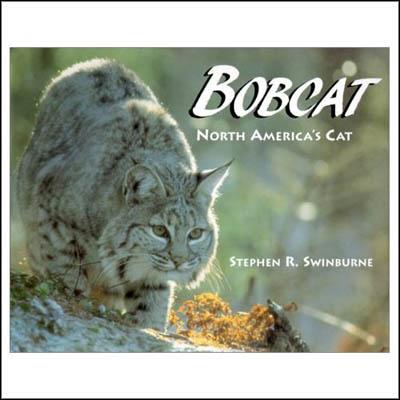
So states the flyleaf of author Stephen Swinburne’s fascinating book, “Bobcat: North America’s Cat.” We begin with a look at a bobcat in the Trevor Zoo at Millbrook Preparatory School in upstate New York. As the author observes this bobcat, he realizes it behaves in many of the same ways our house cats do. If you want to get an idea of how a bobcat behaves, he says, watch your house cat as it hunts, sleeps and eats.
Through the rest of the book, we follow Steve as he journeys first with a group of naturalists to Lake Champlain in Vermont, and then with a group of sixth-grade students to a nature preserve. The goal of both of these groups is to try to track and observe a bobcat in the wild. As we follow Steve’s journeys, we also learn about the habitat, the diet and the habits of the bobcat. Naturalists and students alike find evidence of bobcats, such as tracks, feeding sites and territory markings, but no one sees the bobcat itself. This is because bobcats are elusive, silent and perfectly camouflaged in the forests they inhabit. As the sixth-graders gaze at the ledges surrounding the bobcat’s feeding site, “all of us wonder if there’s a bobcat somewhere out there watching us.”
People are also reading…
Along with the story of Steve and his friends’ trips to search out bobcats, the book includes boxes on every page labeled “Bobcat Facts.” Here we learn some very interesting things about this beautiful wild creature. For instance, bobcats live alone for most of the year. Each bobcat has its own territory, which they mark in several ways, including using their claws to rake trees. This raking deposits scent from the glands between their toes onto the tree, which tells other bobcats “This territory has been claimed! Keep away!”
Another neat fact: Bobcats have white spots on the backs of their ears and a white tip on their tail. Are these spots there just for looks? No. Can you guess why they have these spots? Well, I’m not going to tell you. If you want to know, you’ll have to check out the book!
Filled with beautiful full-color photographs, this is a fascinating look at one of nature’s most elusive and beautiful creatures. Recommended for readers ages 9-12, it’s available at your local libraries. Check it out!


