
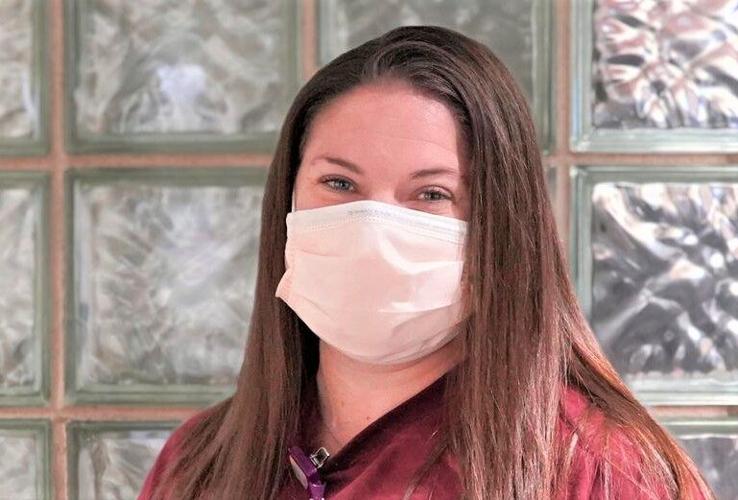
Laura LaCroix hikes almost daily in her line of work, so it’s fair say that she’s seen her share of mountain tops and valleys.
As a nurse for UPMC’s newly formed Street Medicine program, LaCroix has experienced the highs of watching individuals who have been without a home for 15 plus years receive a key to their very own apartment. She has also walked through the lows of sitting with her clients during their final moments in the ICU so, as they die, they know they’re not alone.
The UPMC Street Medicine program covers Dauphin, Cumberland and Perry counties, and formed in March of 2021 to ensure quality, equitable access to healthcare for homeless individuals.
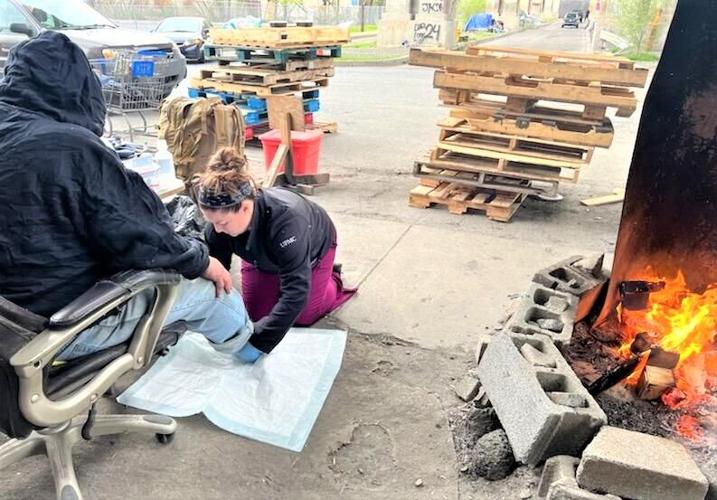
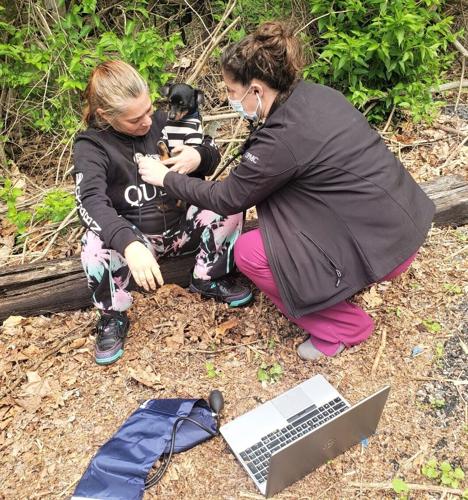
“I run around the woods ... under bridges, we go to abandoned buildings, wherever the homeless might be, and we deliver healthcare to them,” LaCroix said. “So about 75% of my time is spent out in the field trying to find individuals, build relationships with them and get them connected with our better care providers.”
People are also reading…

LaCroix said the goal of the Street Medicine program is to make it easy for homeless individuals to access healthcare. Often, this requires bringing the medicine to them.
“I have huge bookbag that I carry with me that has everything in it that you would find in a traditional clinic from wound care supplies to things to take vitals,” LaCroix said. “We have a portable EKG machine that reads straight to my work cell phone…we have scales that we carry with us, so we run a regular, traditional primary care practice environment in the woods and under bridges.”
LaCroix said she sometimes receives referrals from hospitals that have identified individuals who are homeless and she’ll go meet with the individual and figure out what health care gaps they’re facing. If that person already has a traditional primary care practice, LaCroix said she’ll connect with the nurses there and work as an advocate for both sides.
Often, though, she finds herself wandering trails in the woods in search of homeless individuals. She frequently hears about people in need of care through word of mouth from other homeless individuals. They’ll approach her and tell her about people staying in different locations who maybe haven’t taken their medicine in months.
Persistence
“It probably took me three months of showing up every week before I got my first client, and it wasn’t even him who asked for my help,” LaCroix said.
She said members of her first client’s encampment approached her about a man not taking blood pressure medication for months. LaCroix found where the man was staying, checked his blood pressure and got him the medication he needed. Three more months passed before she got her second client.
LaCroix said she just kept showing up at an encampment in the Carlisle area each week, bringing socks, coffee, hot chocolate, pizza, tents, sleeping bags and whatever else she had to work on building trust and rapport with her clients.
“I knew for a fact that they weren’t getting the healthcare that they needed,” LaCroix said on what kept her going back during those months. “It truly is about building that trust and rapport to let them know that you may not need me for anything at this moment, it may not be because you have any chronic illness, but you might one day end up with a cough, a cold…there are a lot of ticks, so Lyme disease, things like that. We are just here to support you, we care about you, and really it’s about building that relationship with them.”
While the UPMC Street Medicine program is relatively new, LaCroix is no stranger to the outreach; she previously worked as a community health nurse for the Lehigh Valley Health Network based out of Allentown.
She said she just kind of fell into street medicine.
“The first time I was ever introduced to street medicine, when I had put in that application for the Community Health Nurse position out in Lehigh Valley…[the director] said, ‘Do you have any idea what you applied for?’ and I said ‘Nope,’” LaCroix said. “...From the moment that I stepped foot in the woods, I met one of his long-term homeless clients who was chronically homeless for 20 plus years, and he really didn’t like other humans which is why he up and left his house one day to go live in the woods, and I sat down with him and it was probably the most comfortable I’ve ever felt with nursing in my entire life.”
In 2018, LaCroix left Lehigh Valley. She came to UPMC Carlisle in 2020 to work in administration before joining the Street Medicine program the following year.
“The hard part was when I left Lehigh Valley, I just could not leave the homeless alone, so even in my administrative role, I would be sitting in meetings and they would be talking about individuals that were frequenting the emergency department for not necessarily emergent reasons and I kept sticking my nose in the emergency department trying to figure out ways to intervene,” LaCroix said.
UPMC program
LaCroix is currently the only full-time employee for the UPMC program, but she receives administrative support from the fine health center admission effectiveness department. She also developed a variety of partnerships with organizations in the Carlisle community.
Every Wednesday, LaCroix works with a clinic at Community CARES, an organization dedicated to meeting the needs of homeless individuals. She also works closely with Sadler Health Center (a medical center) and Safe Harbour (which provides temporary and long-term housing for the homeless).
“We see her (LaCroix) regularly here helping the people that live here with different problems [and] issues that they may have,” said Barrie Ann George, Vice President of Development and Communications at Safe Harbour. “She’s a very visible person here at the shelter.”
George said LaCroix meets common needs that homeless individuals face, such as foot care and access to medicine. She emphasized the importance of follow-up care after an individual returns from the hospital, something LaCroix is able to provide.
George added that for individuals struggling with homelessness, preventable diagnoses can go unnoticed and become worse. This is what makes LaCroix’s work a “huge help.”
“I think the challenge is to connect with that homeless community to get them the services they need and deserve and I think to have someone like Laura and her team who have that compassion and that drive to actually go out and find the people…I think that’s so unique and I think that’s so impressive that it really helps people from suffering more than they need to,” George said.
LaCroix said the Street Medicine program received $25,000 from the UPMC Pinnacle foundation to get started and cover the cost of supplies and medicines. Everything else comes through private donations and the program is working to apply for grants with the intention of expanding their team. One of the things that makes the program unique, according to LaCroix, is that individuals are billed for their services. Individuals without insurance, though, are covered with the help of a charity fund.
LaCroix may work with medicine, but her focus is on the people.
“Sometimes those that have the least will share the most and it’s really the relationships, the rapport that I have with them,” she said. “It’s a bonus I get to hike almost every single day, so I can’t be upset with that, but it was really just the clients. I love them all very much.”

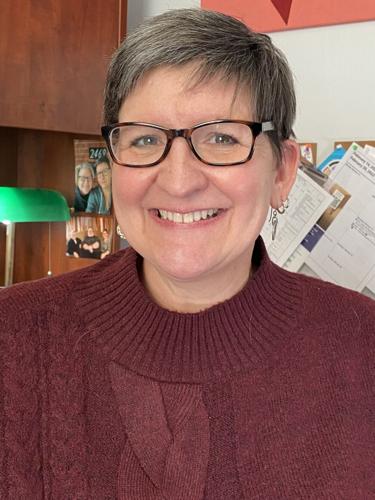
Barrie Ann George
Maddie Seiler is a news reporter for The Sentinel and cumberlink.com covering Carlisle and Newville. You can contact her at mseiler@cumberlink.com and follow her on Twitter at: @SeilerMadalyn